VSPrimary
Comparison · Bilingual vs British
BEST vs. ISC
K1–Secondary 6 vs primary-only
BEST Thai-English programme through Secondary 6 vs NEASC-accredited ISC primary, with both fee schedules published.
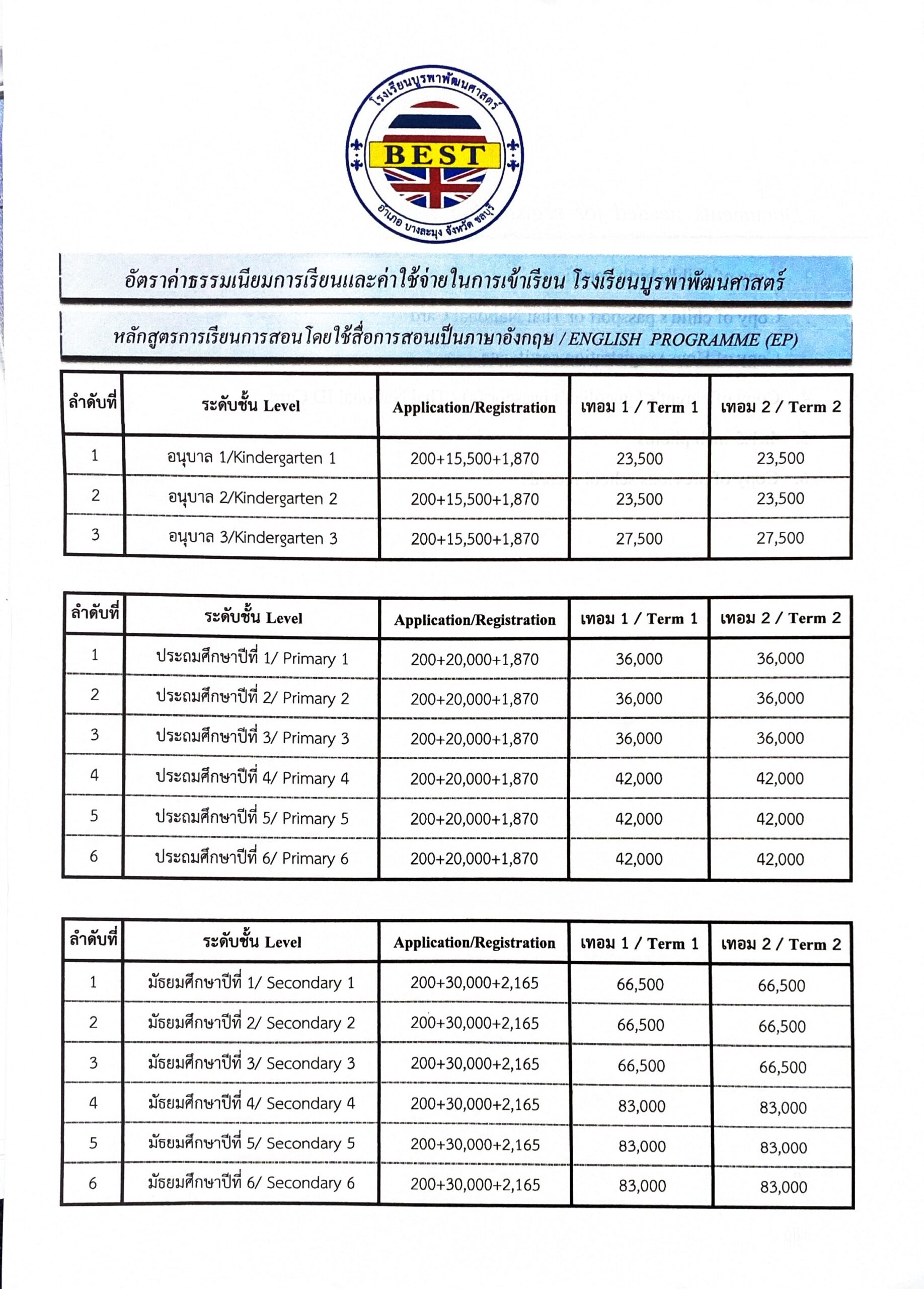
This comparison is deliberately not a price ranking. SISB Rayong publishes a trilingual international route from age two and dated 2026/27 tuition of ฿401,700–฿789,300. BEST publishes a Thai-English bilingual route from Kindergarten 1 to Secondary 6 and undated annualised tuition of ฿47,000–฿166,000. Confirm BEST's current year, qualification route and complete inclusion list before ranking.
// Jump to → SISB Rayong editorial ↗ · BEST editorial ↗ · British schools hub ↗ · Budget schools hub ↗ · Where to live ↗ · Start Here primer ↗
Both schools publish provision from the early years through secondary, but they are not interchangeable. SISB follows an international Singapore-to-Cambridge sequence; BEST follows a Thai Ministry programme delivered through Thai and English. SISB's schedule is dated 2026/27, while BEST's published fee page is undated.
// In this guide → SISB Rayong editorial ↗ · BEST editorial ↗ · British schools hub ↗ · Budget schools hub ↗ · Where to live ↗ · Start Here primer ↗ · Parent FAQ ↗ · All 120 comparisons ↗
| Dimension | SISB Rayong | Burapa English-Programme School of Thailand |
|---|---|---|
| School | Singapore International School Rayong | Burapa English-Programme School of Thailand |
| Age span | Ages 2–18; 2026/27 new applications Nursery 1–Grade 10 | Kindergarten 1–Secondary 6 |
| Curriculum | EYFS, Singapore Primary, Singapore/UK hybrid Grades 7–8, Cambridge IGCSE and AS/A-Level | Thai-English bilingual English Programme following the Thai Ministry of Education curriculum |
| Published tuition | Dated 2026/27: Nursery ฿401,700; Kindergarten ฿429,600; Primary ฿470,700–฿567,300; Grades 7–10 ฿609,300–฿650,700; Grades 11–12 ฿789,300. | Undated annualised tuition: K1–2 ฿47,000; K3 ฿55,000; P1–3 ฿72,000; P4–6 ฿84,000; S1–3 ฿133,000; S4–6 ฿166,000. |
| Named extras | Application ฿5,000; assessment ฿5,000; enrolment ฿220,000; deposit ฿50,000; resources, meals and ELS separate. | Combined application, registration and insurance: Kindergarten ฿17,570; Primary ฿22,070; Secondary ฿32,365. Bus and food are available but unpriced; uniforms, books, activities and exams also need confirmation. |
| Planning point | Fees reach Grade 12, but 2026/27 new applications stop at Grade 10. | Day-only bilingual provision; confirm the current academic year, compulsory extras, English allocation and Thai qualification route. |
| Sources | campus overview · 2026/27 fees | fee page · fee schedule image · school overview · history · OPEC listing |
| Live editorial | Read the SISB Rayong editorial | Read the BEST editorial |
The fee years do not match: SISB is dated 2026/27, while BEST's tariff is undated. Request SISB’s grade, entry, resources, meals, ELS and transport rows alongside BEST's current-year tuition, entry charges, food, bus, uniforms, books, activities, exams and support.
SISB publishes dated 2026/27 tuition of ฿401,700–฿789,300. BEST publishes undated annualised tuition of ฿47,000–฿166,000 and stage-specific combined entry charges of ฿17,570–฿32,365.
SISB moves from EYFS and Singapore Primary into Cambridge IGCSE and AS/A-Level. BEST provides a Thai-English bilingual English Programme aligned with Thailand's Ministry of Education curriculum from Kindergarten 1 through Secondary 6.
SISB’s tariff reaches Grade 12 while 2026/27 new applications stop at Grade 10. BEST families must verify the fee year, English-medium subject allocation, Thai qualification and complete inclusion list.
The schools overlap from kindergarten through secondary, yet lead toward different records of learning. SISB combines English, Thai and Mandarin with Singapore and Cambridge stages; BEST combines Thai and English within Thailand's national curriculum.
Ask both schools to state the child’s proposed class, start date, age cut-off and following year. SISB publishes Nursery through Grade 12 fee rows, though 2026/27 new applications stop at Grade 10. BEST publishes Kindergarten 1 through Secondary 6.
Do not translate Grade, Primary and Secondary labels by age alone. Request the placement test, class equivalence, calendar and written progression route, particularly if a child may move between an international system and the Thai system later.
SISB records English, Thai and Mandarin. Ask for weekly allocation, subject language, newcomer support and the transition from Singapore stages into Cambridge qualifications.
BEST records Thai and English. Ask which subjects are taught in each language at the proposed stage, how English proficiency is assessed, what Thai literacy level is expected and how newcomers receive support.
At both visits, request anonymised work and the report format in each teaching language. Observe how teachers explain unfamiliar tasks and whether translation supports learning or merely task completion.
SISB’s 2026/27 tuition runs from ฿401,700 to ฿789,300. Application and assessment are ฿5,000 each, enrolment ฿220,000 and deposit ฿50,000. Resources are ฿30,500–฿84,000, meals ฿26,400–฿39,000 and ELS ฿20,000–฿30,000 per term.
BEST's undated schedule annualises tuition at ฿47,000 for K1–2, ฿55,000 for K3, ฿72,000 for P1–3, ฿84,000 for P4–6, ฿133,000 for S1–3 and ฿166,000 for S4–6. Its combined application, registration and insurance charges are ฿17,570 in kindergarten, ฿22,070 in primary and ฿32,365 in secondary.
BEST identifies food and school bus services but does not publish usable current prices for them. Uniforms, books, activities and examinations are also unpriced in the comparison ledger. Ask both schools for a personalised, dated offer and create totals only from compulsory written rows.
SISB publishes Cambridge IGCSE and AS/A-Level after its Singapore stages. Confirm which senior grades currently operate, accept newcomers and offer each subject at the Rayong campus.
BEST's endpoint is Secondary 6 under the Thai Ministry pathway. Ask which final qualification and transcript pupils receive, which subjects are examined, how university admissions support works and what English-language evidence is supplied for applications outside Thailand.
Rehearse relocation after two years. Request the transcript, curriculum map, language evidence, grading scale and teacher references each school would supply. A lower current bill may carry additional tutoring or transfer preparation if the next school uses a different system.
SISB publishes ELS at ฿20,000–฿30,000 per term. BEST does not publish a usable language- or learning-support tariff in the current ledger.
If support matters, request the staff member, group size, minutes per week, review date, progress measure, exit criteria and price. Separate English acquisition from other learning needs.
Bring existing reports before assessment and ask admissions to state any limitations in writing.
SISB’s published sequence reaches Cambridge IGCSE and AS/A-Level, but the Rayong campus opened in 2023 and its 2026/27 new-applicant range stops at Grade 10. Ask which secondary grades are operating now, how many pupils are in each cohort, which IGCSE subjects are taught and when the first Rayong AS/A-Level cohort is expected.
BEST publishes Secondary 1–6 under its Thai-English English Programme. Ask which upper-secondary tracks run now, which subjects are taught in English, what national examinations apply, how timetable choices work and what university-counselling evidence the current cohort receives.
For either school, request anonymised subject-choice forms, a sample transcript, the examination calendar and the university-counselling timeline.
BEST appears in Thailand's Office of the Private Education Commission directory, which is useful evidence of the school record but does not turn its Thai bilingual programme into a Cambridge or British curriculum. SISB’s current ledger record does not list a campus-level accreditation.
Ask each school for the campus-specific register or examination evidence that applies to the child's programme, then compare teacher qualifications, class size, homework and reporting cadence. Keep regulatory registration separate from curriculum, examination and teaching-quality claims.
SISB publishes a 2% full-year tuition discount, sibling tuition discounts of 5% for the second child and 10% for later children, and a 20% enrolment reduction from the second child. The current BEST ledger does not record a standard annual-payment or sibling discount.
Ask BEST to state any current concession in writing and keep it separate from the undated standard tariff.
SISB is in Nong Taphan, Ban Khai; BEST is in Nongprue. Drive both routes at arrival and collection times, including work and sibling stops.
BEST advertises bus service without a current public price, and neither ledger record supplies a comparable address quote. Ask for pickup windows, vehicle time, supervision and the exact address price. Both schools are day-only.
Save offers, fee schedules, calendars and placement answers together.
Arrive before the class begins and watch the transition from gate to room. Record how quickly the child separates, who welcomes them, which language adults use and whether the routine is understandable without repeated prompting. Ask what happens on a difficult morning and how parents are informed. A polished tour after children leave cannot answer these questions.
Ask for a starting assessment, mid-year report and anonymised work from the proposed class. At SISB, trace English, Thai and Mandarin into Singapore and Cambridge stages. At BEST, inspect work in Thai and English and trace how its bilingual programme covers the Thai Ministry learning standards.
Record the balance of adult-led, child-initiated, individual and group activity during the visit. Ask how teachers adapt the same task for a child who is new to English, already reading or reluctant to join a group. The right environment is not defined by one teaching philosophy; it is the setting where staff can explain how this child will participate and progress.
Confirm arrival supervision, meals, allergies, illness procedures, late collection and activities. SISB prices meals and resources separately. BEST publishes that food and bus services exist but not what a current family at a specific stage and address will pay, so both require a written inclusion list.
Place both calendars beside the family’s work calendar. Count closures that require alternative care and ask whether holiday programmes are offered, separately registered or guaranteed to enrolled pupils. A school-year tuition comparison does not capture care purchased during long breaks.
SISB is in Nong Taphan, Ban Khai; BEST is in Nongprue, Banglamung. Verify each entrance, transport route and contract address before payment. Test gate queues, parking and the return journey.
Both schools are day-only in the current ledger. Families requiring residential care should treat that as a non-fit.
For each school, finish the sentence: “This place works if…” Include the quoted total, language routine, classroom fit, support availability, care hours, travel ceiling and next-school plan. Then write the conditions that would trigger a review. This prevents a single attractive feature from hiding an unresolved cost or transition risk.
Run the same exercise for two future dates. At age six, both schools may be usable, but SISB's international primary sequence and BEST's Thai bilingual primary sequence create different language and transfer demands. At age eleven, compare SISB's growing Cambridge transition with BEST's Secondary pathway, present subject languages and support needs.
Before signing, compare the two schools’ invoice language line by line. Ask each admissions team to mark every compulsory, optional, refundable and one-time row, then calculate cash due before the first day, the complete first year and a normal later year. Keep BEST's fee year, food, bus, uniform, book, activity and examination costs open until the signed offer resolves them.
Also rehearse a mid-year move. Ask what notice is required, which reports and curriculum records would be released, how deposits are returned and whether prepaid services are refundable. Families using the Eastern Seaboard industrial corridor should test both routes at real collection time, because a lower fee cannot compensate for an unsustainable daily journey.
Ask how each school handles a mid-year departure before assuming either transfer will happen neatly at the end of a stage. Record required notice, reports supplied, outstanding-fee conditions and whether unused services can be refunded. A family expecting relocation should weight these documented terms alongside teaching and price.
Do not pay while a condition remains material and unanswered. Ask admissions to correct the offer email, retain both 2026/27 schedules and note who supplied every grade and support answer. That record makes the decision auditable.
BEST publishes much lower headline tuition, but its schedule is undated and several extras are unpriced. Confirm a current written offer before ranking it against SISB's dated 2026/27 schedule.
No. SISB combines Singapore and Cambridge stages. BEST is a Thai-English bilingual English Programme following Thailand's Ministry of Education curriculum.
SISB publishes ages 2–18, with 2026/27 new applications through Grade 10. BEST publishes Kindergarten 1 through Secondary 6.
Ask for grade availability, tuition, application, assessment, enrolment, deposit, resources, meals, transport, trips, devices, ELS and refund terms.
Ask for academic year, stage, tuition, combined entry charges, food, bus, books, uniform, activities, examinations, language support and refund terms.
Use the decision framework above to weigh curriculum, fees, continuity, location and your child’s fit.